- A sleeping adult gives off roughly as much heat as a 75 to 100 watt bulb.
- Waking up hot is usually caused by a bed that traps heat and moisture, not by the room.
- Thinner layers, percale or lyocell sheets and a breathable topper are among the fixes.
You go to bed comfortable and wake at 2 a.m. with the covers kicked off and your T-shirt damp. The thermostat hasn’t moved. So what changed?
You are the heater
A sleeping adult gives off roughly as much heat as a 75 to 100 watt bulb. All of it has to pass through whatever is under and over you. If your mattress, sheets and covers let heat and moisture through, it leaves. If they don’t, it builds up in the small pocket of air around your body.
That pocket, not the room, is what you feel. It is why an open window sometimes makes no difference.
Where heat gets trapped
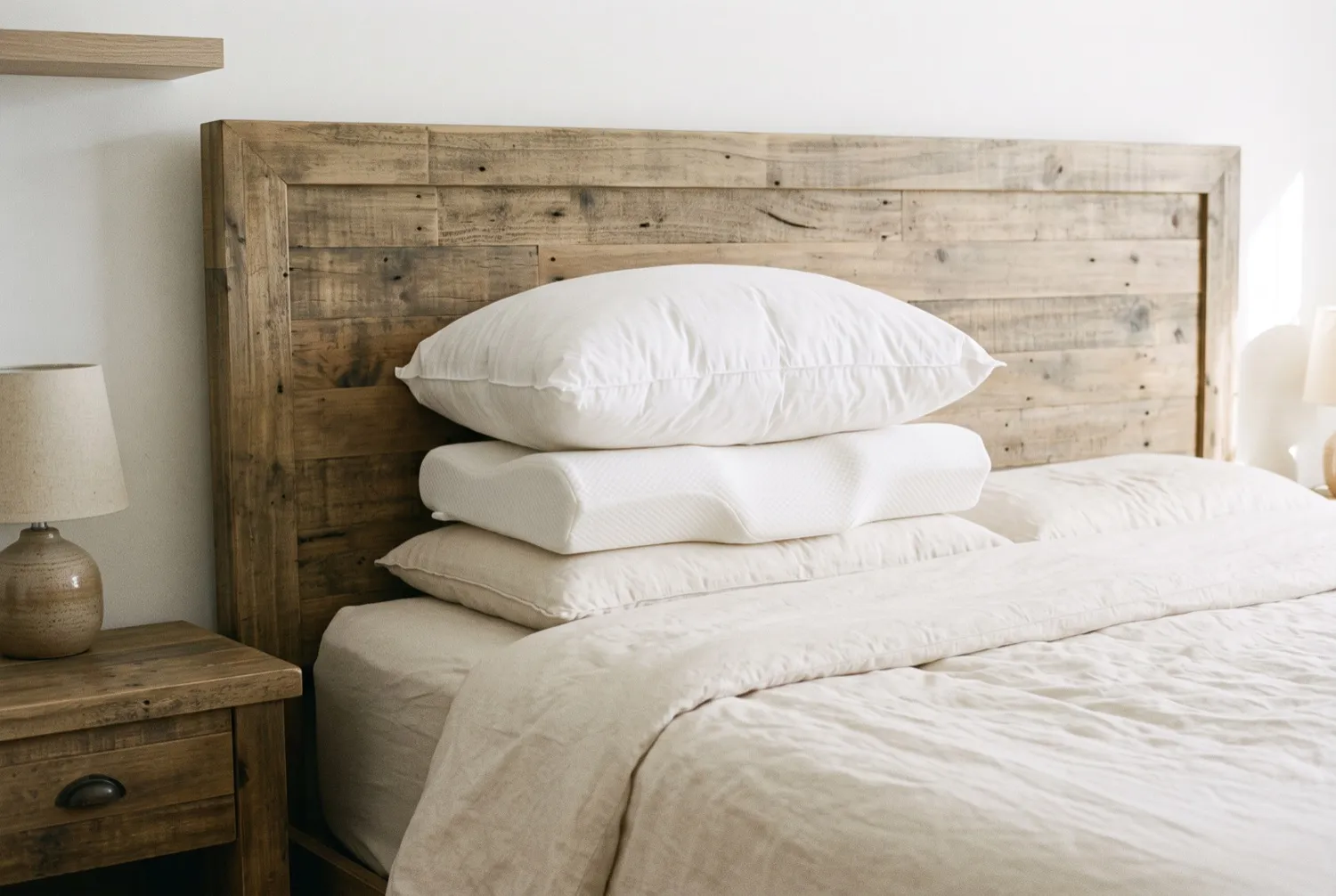
Under you. Dense memory foam moulds closely to the body and leaves little room for air. Toppers and mattresses with open structures sleep cooler.
In the sheets. Fibre and weave matter. Brushed microfibre is made of very fine synthetic fibres packed tightly together, which holds warmth against the skin. Lyocell (TENCEL™) and cotton percale breathe more easily and move moisture away.
Over you. One thick duvet is all or nothing. Thinner layers let you adjust.
“Cooling” covers that only feel cool. Some fabrics feel cold to the touch for the first few minutes and then warm up like any other. What matters over a whole night is whether the fabric breathes and moves moisture, not how cold it feels in the store.
Other causes worth checking
- Alcohol in the evening
- A heavy or spicy late meal
- Hard exercise within a couple of hours of bed
- A partner, a dog or a cat sharing the bed
- Flannel pyjamas in a heated house
Fixes, cheapest first
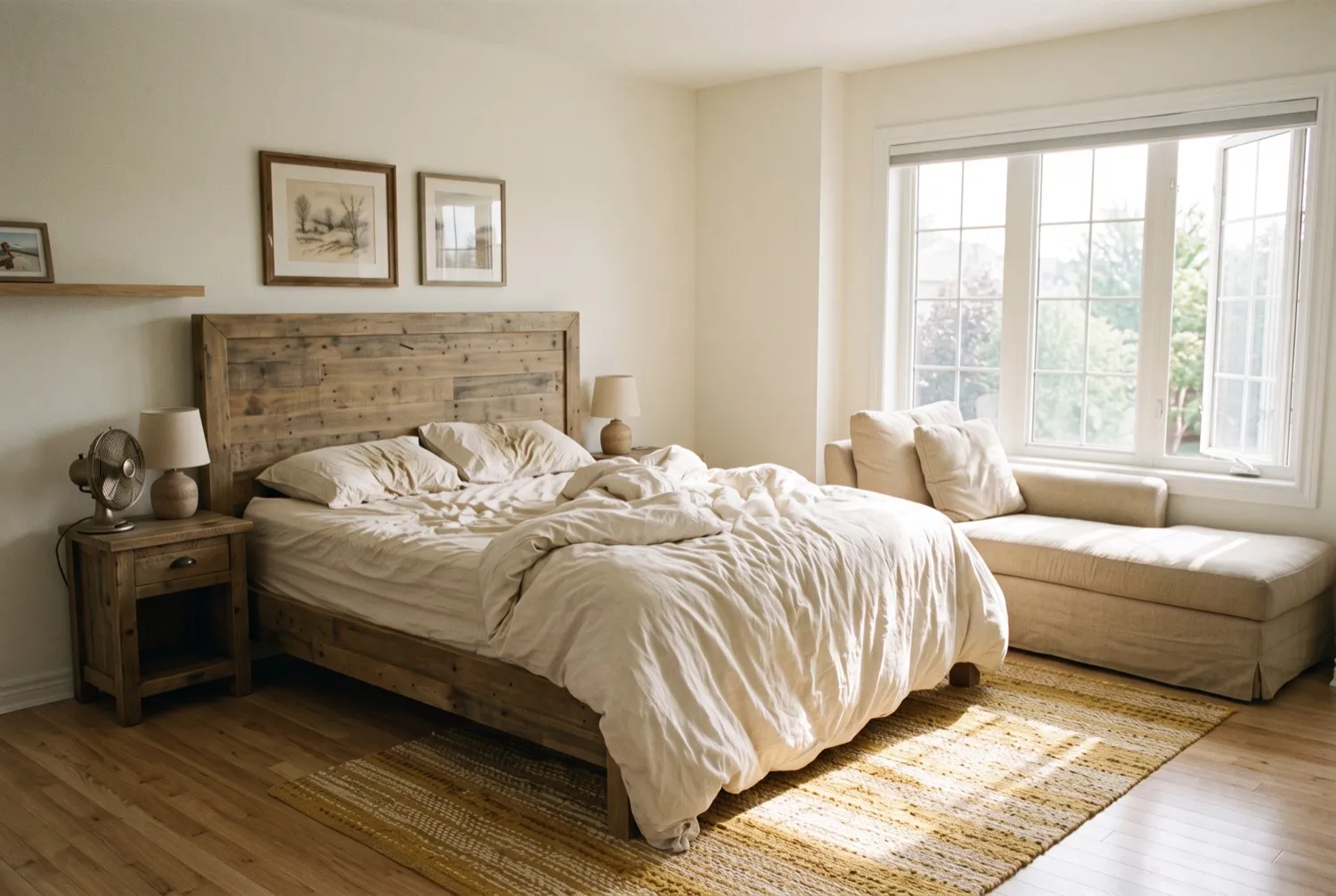
- Turn the thermostat down to 16 to 19 °C at night.
- Swap one heavy duvet for a lighter one and a blanket.
- Sleep in light cotton or nothing.
- Change to percale or lyocell sheets.
- Put a breathable topper over a hot foam mattress.
- Take a warm shower an hour before bed, which helps your core temperature fall.
When it isn’t the bed
Drenching night sweats that soak the sheets are different from sleeping warm. Menopause and perimenopause are the most common cause. Some medications, including certain antidepressants, cause them too, as do infections and thyroid problems.
If you have soaking sweats regularly, or sweats with fever or weight loss you can’t explain, see your doctor.
This article is general information, not medical advice. If poor sleep is affecting your days, talk to your doctor.