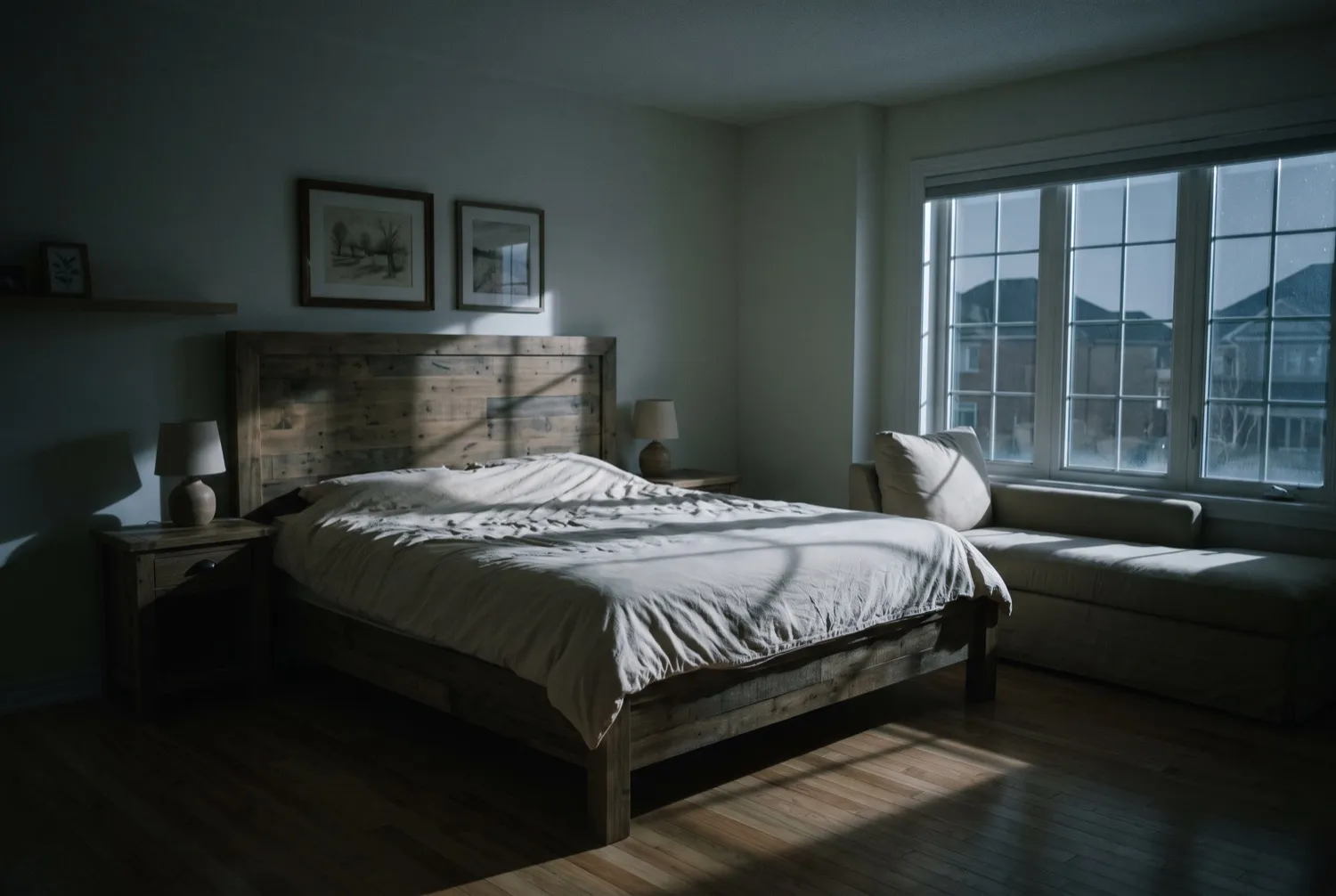
- Being tired means low energy, while being sleepy is the physical pull toward sleep.
- Stress, bright screens and worry keep the body's alert mode on, and it overrides sleep pressure.
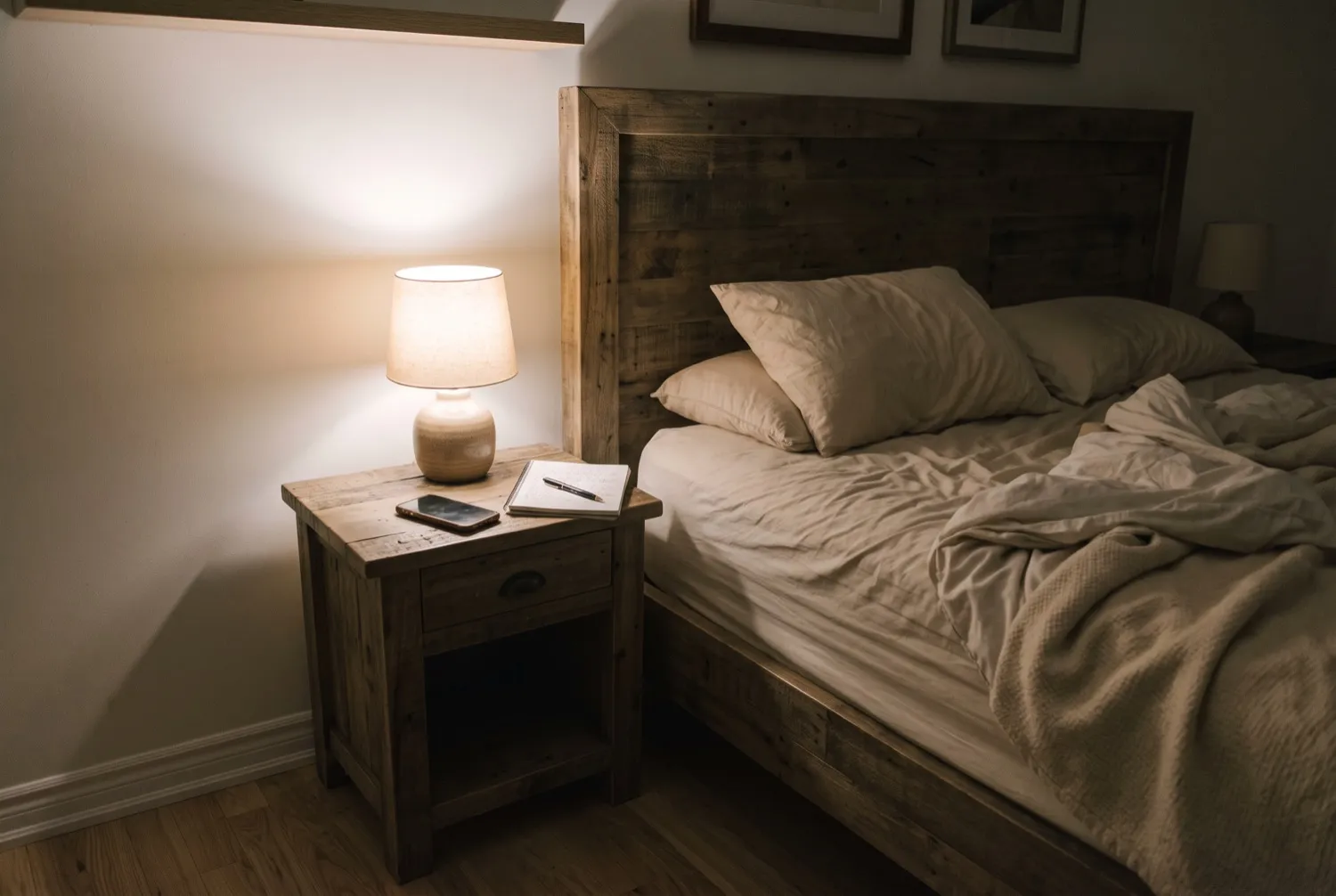
- A wind-down hour with a set stopping time, dim lights and a written to-do list helps sleep arrive.
You yawn through the afternoon and count the hours to bed. Then your head hits the pillow and your brain opens seventeen tabs. It has a name among sleep clinicians: tired but wired.
Tired and sleepy are different
Tired is low energy. Sleepy is the physical pull toward sleep: heavy eyelids, a nodding head. You can be deeply tired and not sleepy at all, because a second system is holding you awake.
That system is arousal, your body’s alert mode. Stress, a late deadline, an argument, a bright screen or simply worry about not sleeping all keep it switched on. When arousal is high it overrides sleep pressure.
What keeps the alert system on
- No gap between day and bed. Answering email at 10:45 and expecting sleep at 11:00.
- Light. Bright light in the evening, screens included, delays the release of melatonin.
- A drifting schedule. Late nights and lie-ins move your body clock, so 11 p.m. no longer feels like night to your brain.
- Caffeine, which lasts far longer than the buzz.
- Trying to sleep. Effort is arousal. The harder you try, the more awake you get.
A wind-down that works
Think of the last hour of the day as a runway.
- Set a stopping time for work, news and chores, about an hour before bed.
- Empty your head onto paper. Write tomorrow’s to-do list. In one study, people who wrote a specific list for the next day fell asleep faster than those who wrote about what they had already done.
- Dim the lights. Lamps in place of ceiling lights.
- Do something quiet with your hands or eyes: a paper book, a bath, stretching, a puzzle.
- Go to bed when you are sleepy, not when the clock says so.
In bed
Slow your breathing, with the breath out longer than the breath in. Or try the reverse trick: keep your eyes open and gently tell yourself to stay awake. Taking the pressure off often lets sleep arrive.
Many people find deep, even pressure calming, which is the idea behind weighted blankets. The evidence is still modest, so judge one by how you feel over a few weeks.
During the day
Morning daylight and some exercise are the two strongest daytime levers. Both make evening sleepiness arrive on time.
If a racing mind at night comes with low mood or constant worry in the day, talk to your doctor. Anxiety and insomnia feed each other, and both respond well to treatment.
This article is general information, not medical advice. If poor sleep is affecting your days, talk to your doctor.