- Sleep researchers generally recommend a bedroom between about 16 and 19 °C, cooler than most Canadian thermostats are set.
- The aim is cool air on your face and a comfortable pocket under the covers.
- When partners disagree, set the room for the warm sleeper and give the cold sleeper an extra blanket.
Most Canadian thermostats sit at 20 to 22 °C all evening and stay there overnight. That is comfortable for watching television. For sleep it is on the warm side.
The range to aim for
Sleep researchers generally recommend a bedroom between about 16 and 19 °C. The reason is simple. Your core temperature has to fall by about a degree for you to fall asleep and stay asleep, and a cool room makes it easy for your body to shed that heat.
Rooms that are too warm are linked to more wake-ups and less deep and REM sleep. Too cold is a problem as well: below about 12 °C most people sleep worse, because the body has to work to stay warm.
Cool room, warm bed
The aim is not to feel cold. It is cool air on your face and a comfortable pocket under the covers. Think of it as two settings:
- The room: 16 to 19 °C.
- The bed: enough layers that you are comfortable, and can push one off at 3 a.m.
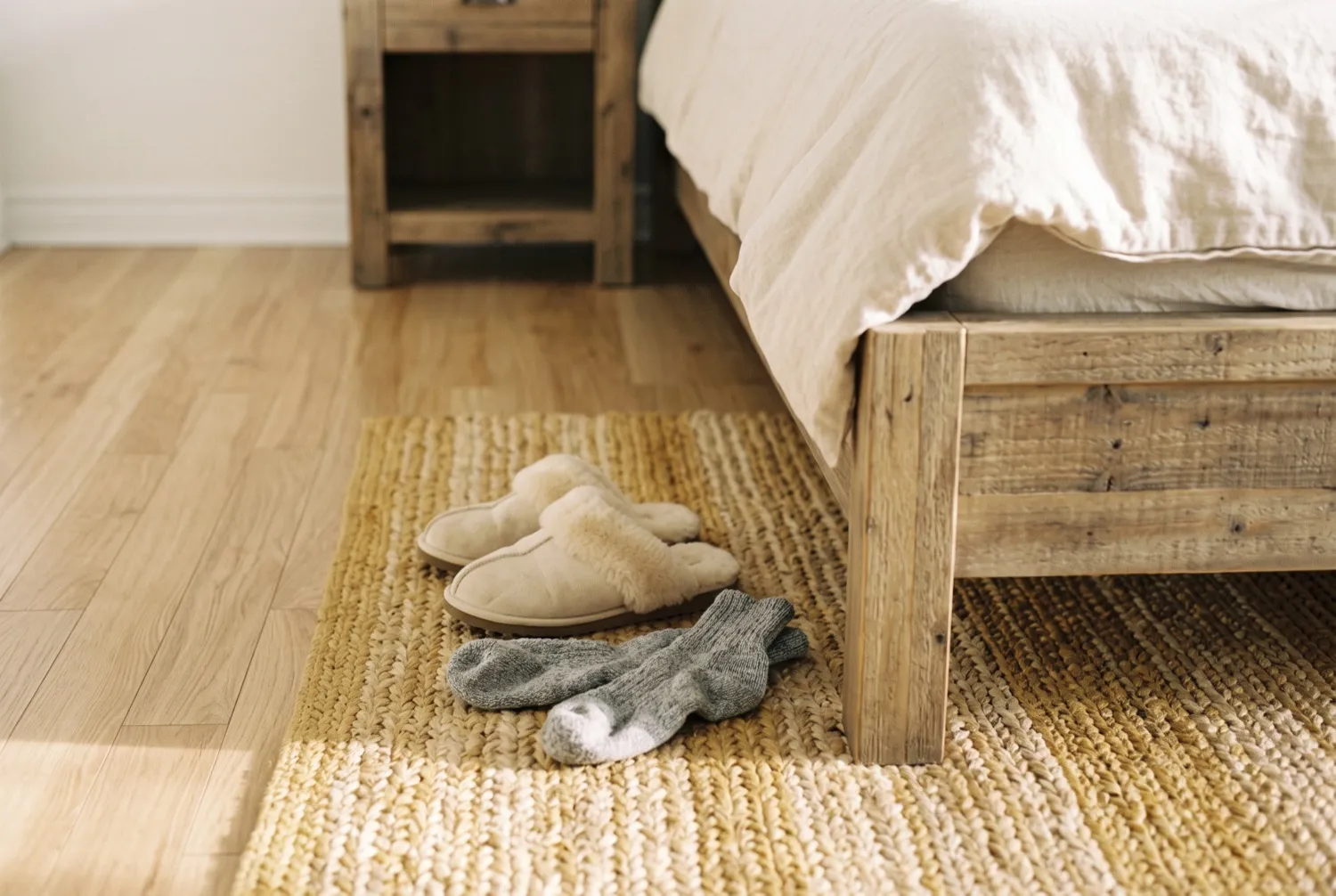
If your feet are cold, warm them. Cold feet slow down sleep by keeping heat locked in your core.
How to get there in a Canadian house
In winter
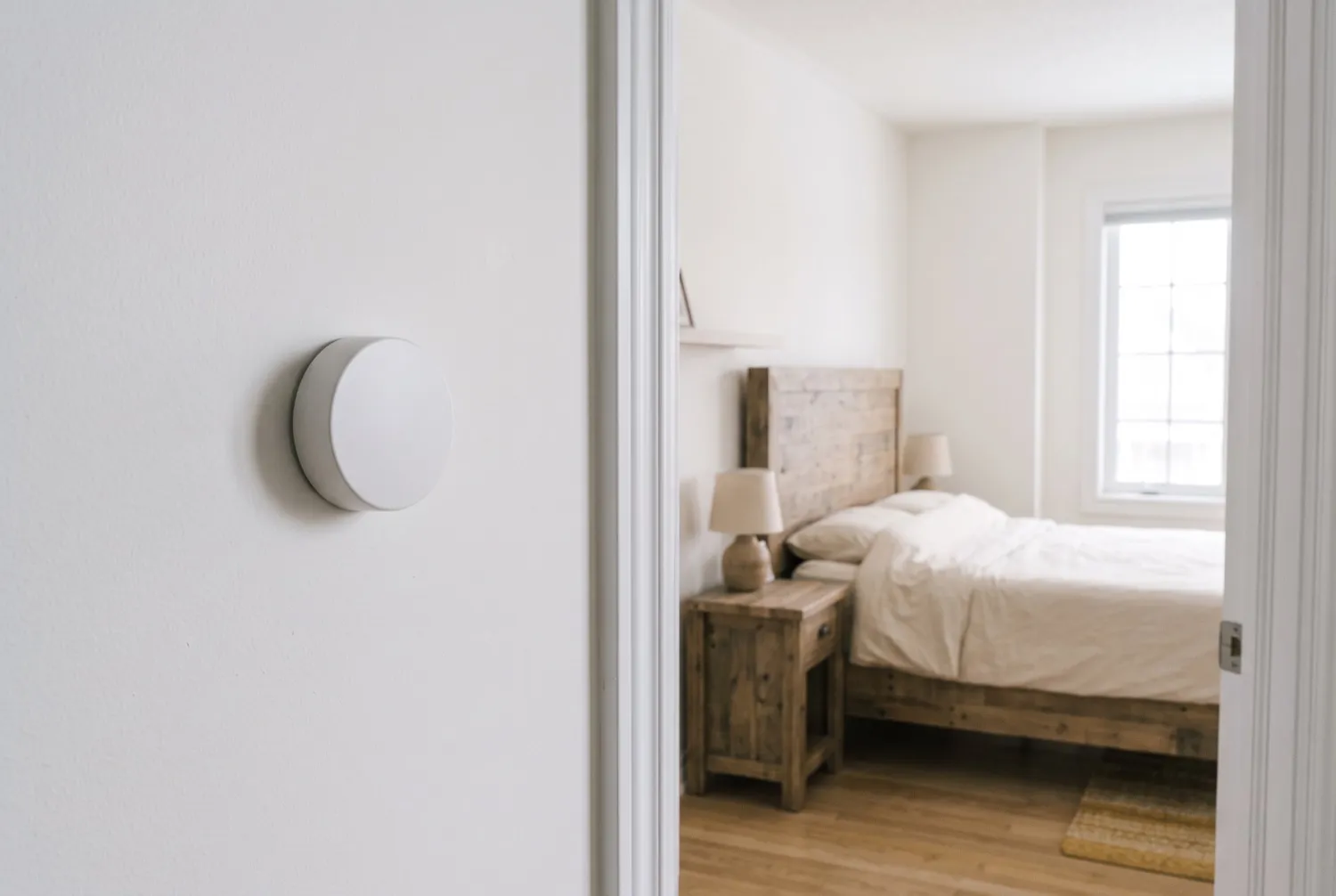
- Program the thermostat to drop at bedtime and come back up half an hour before you wake. A warm room in the morning makes getting up easier.
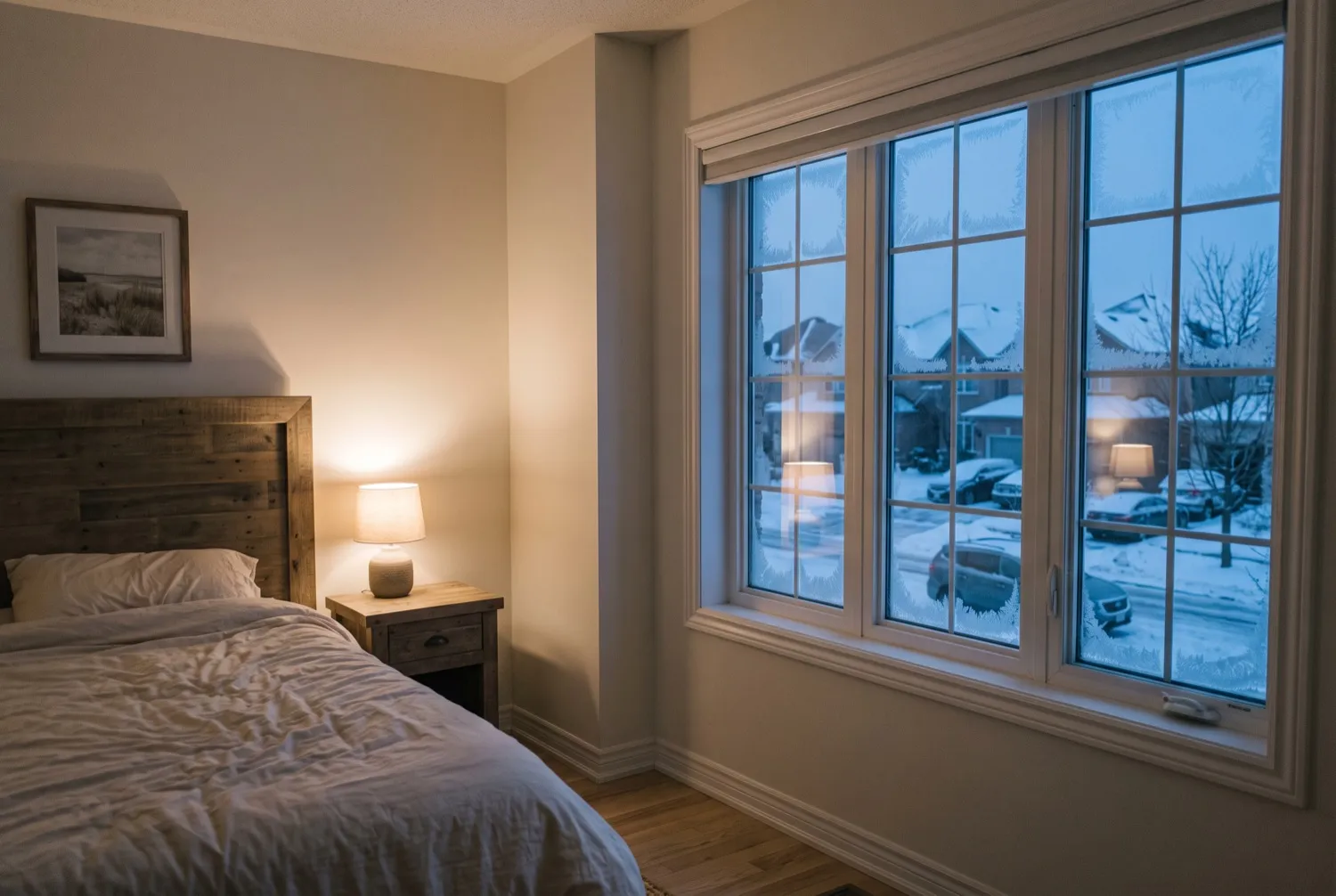
- Bedrooms upstairs run warmer than the thermostat on the main floor says. A cheap room thermometer on the nightstand tells you the truth.
- Dry furnace air makes a room feel colder and dries your throat. A humidifier set to 30 to 50% helps.
In summer
- Close blinds on the sunny side during the day.
- A fan cools you by moving air across your skin, so point it at the bed.
- If you have no air conditioning, a cool shower before bed and lighter sheets do more than you would expect.
When two people disagree
It is common for one partner to run hot and the other cold. Set the room for the warm sleeper and give the cold sleeper their own extra blanket. Separate duvets on one bed, the Scandinavian way, end most of these arguments.
The bonus
Turning the heat down by a few degrees for eight hours a night also trims the heating bill. Better sleep that costs less is rare.
Babies, older adults and anyone unwell may need a warmer room. Follow your doctor’s or public health advice for them.
This article is general information, not medical advice. If poor sleep is affecting your days, talk to your doctor.