- Bright light in the two hours before bed pushes your body clock later, so you feel sleepy later.
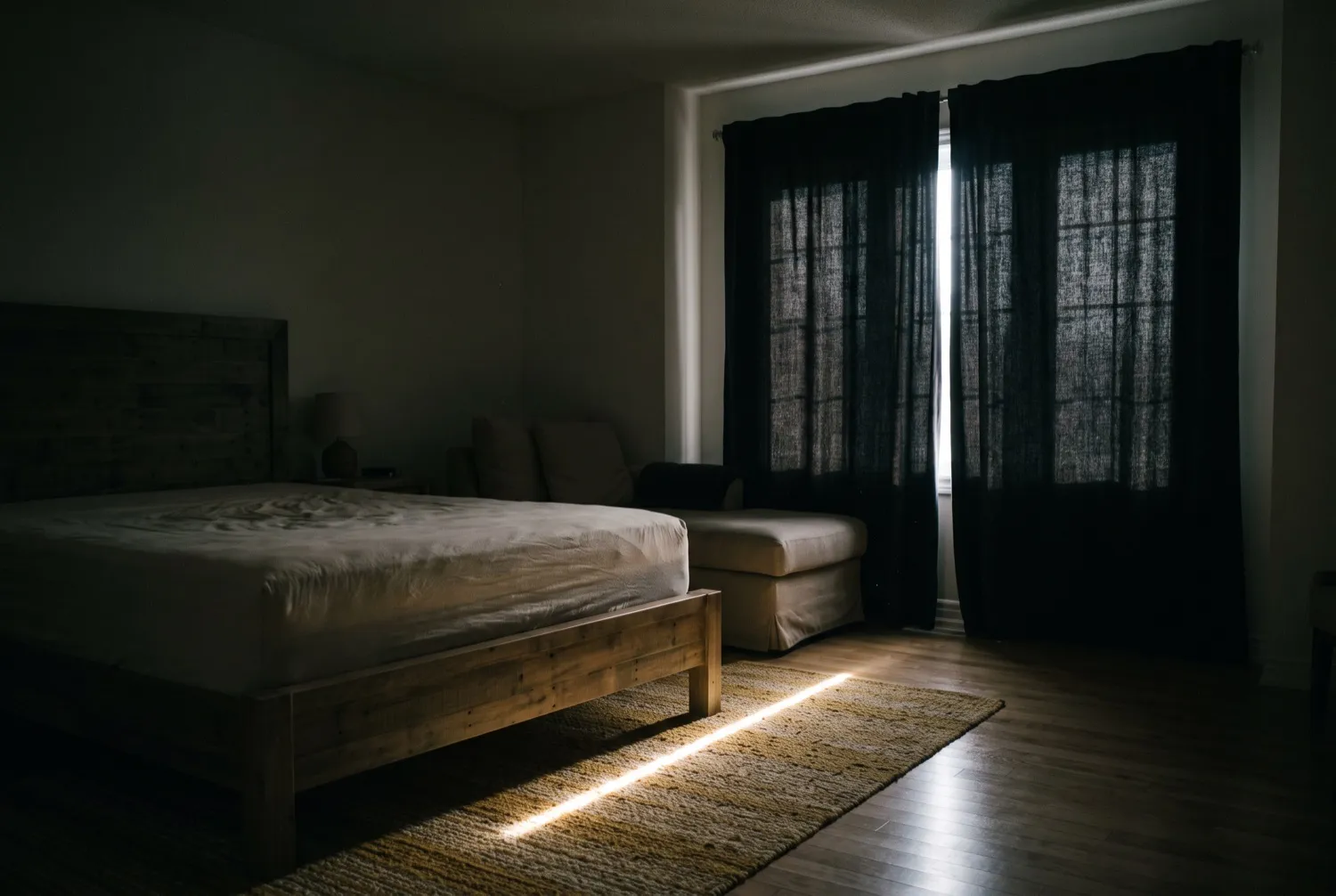
- A room is dark enough when you cannot see your hand clearly at arm's length.
- A sleep mask is the cheapest blackout, and covering small standby lights with black tape also works.
Your brain decides when it is night by measuring light. Give it the wrong signal at the wrong hour and it adjusts your sleep to match.
What light does
Light reaches special cells in the eye that report straight to the body clock. In the evening, darkness lets your brain release melatonin, the hormone that says night has started. Light holds it back, and blue-rich light does so most strongly.
Two times of day matter most:
- The evening. Bright light in the two hours before bed pushes your clock later, so you feel sleepy later.
- The night itself. Eyelids let a fair amount of light through. Light during sleep makes it shallower and can wake you at the end of a cycle. In one laboratory study, a single night of sleeping in moderate room light raised heart rate and affected blood sugar control the next morning.
How dark is dark enough?
A useful test: once your eyes have adjusted, you should not be able to see your hand clearly at arm’s length. If you can make out the furniture, there is room to improve.
Find the leaks
Lie in bed with the lights off for five minutes and look around.
- Streetlight around the edges of the blind
- Standby lights on a television, charger or power bar
- A bright clock display
- Hallway light under the door
- Summer dawn at 5 a.m.
Fixes, cheapest first
- Cover or unplug the small lights. A bit of black tape works.
- Turn the clock away or dim it.
- Roll a towel along the bottom of the door.
- Wear a sleep mask. It is the cheapest blackout there is, and it travels. Look for one with eye cups or padding that blocks light at the bridge of the nose.
- Hang blackout curtains that overlap the window frame at the sides and top.
Evening light
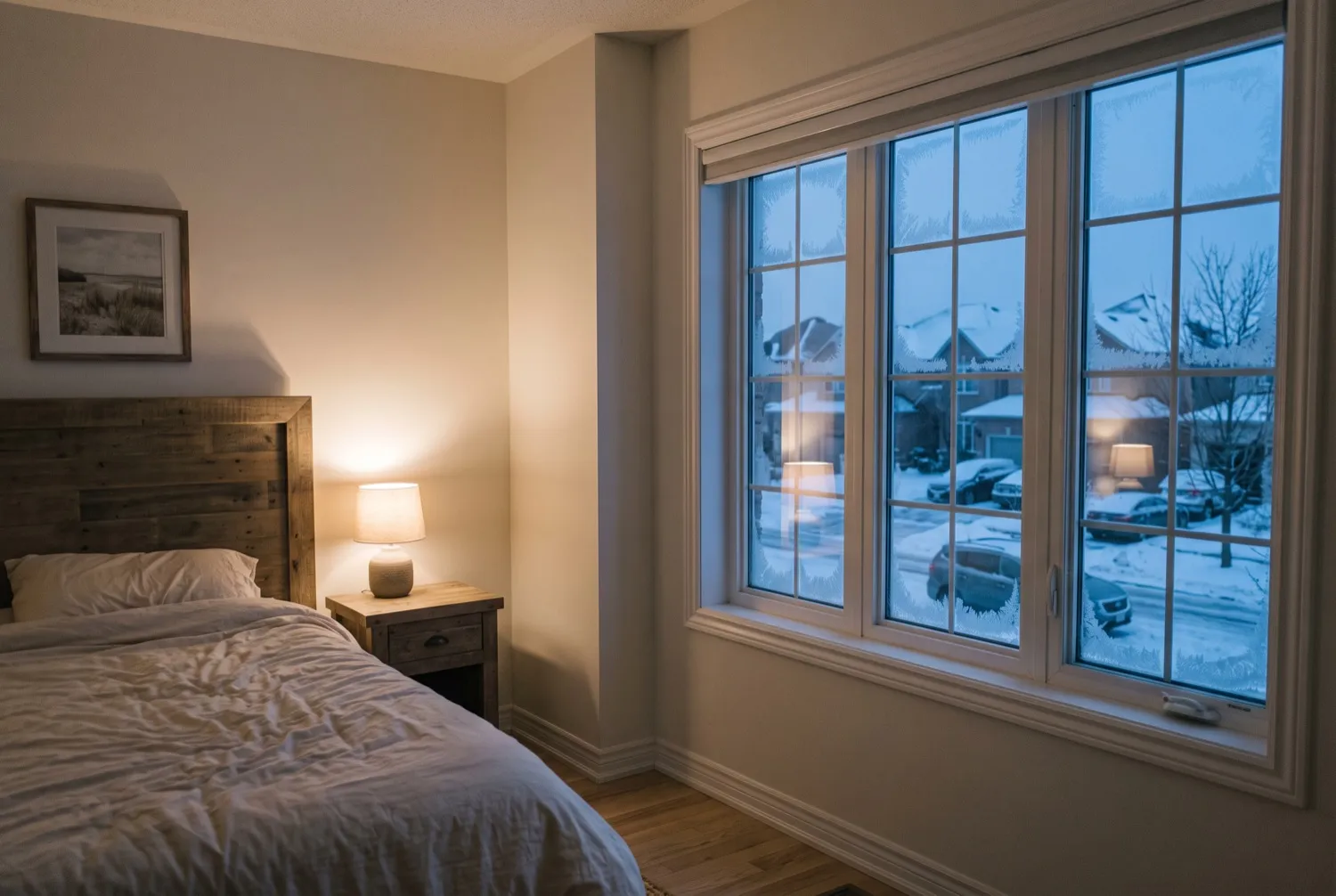
- Use lamps in place of ceiling lights after dinner.
- Turn on the night mode on phones and tablets, and lower the brightness. Distance and brightness matter more than the colour filter.
- If you get up at night, use a dim, warm night light and leave the main light off.
Then do the opposite in the morning
Darkness at night is half of it. Bright light in the first hour after waking sets your clock for the next night. Open the curtains straight away, and get outside if you can, even when it is overcast.
This article is general information, not medical advice. If poor sleep is affecting your days, talk to your doctor.